Broken Spring
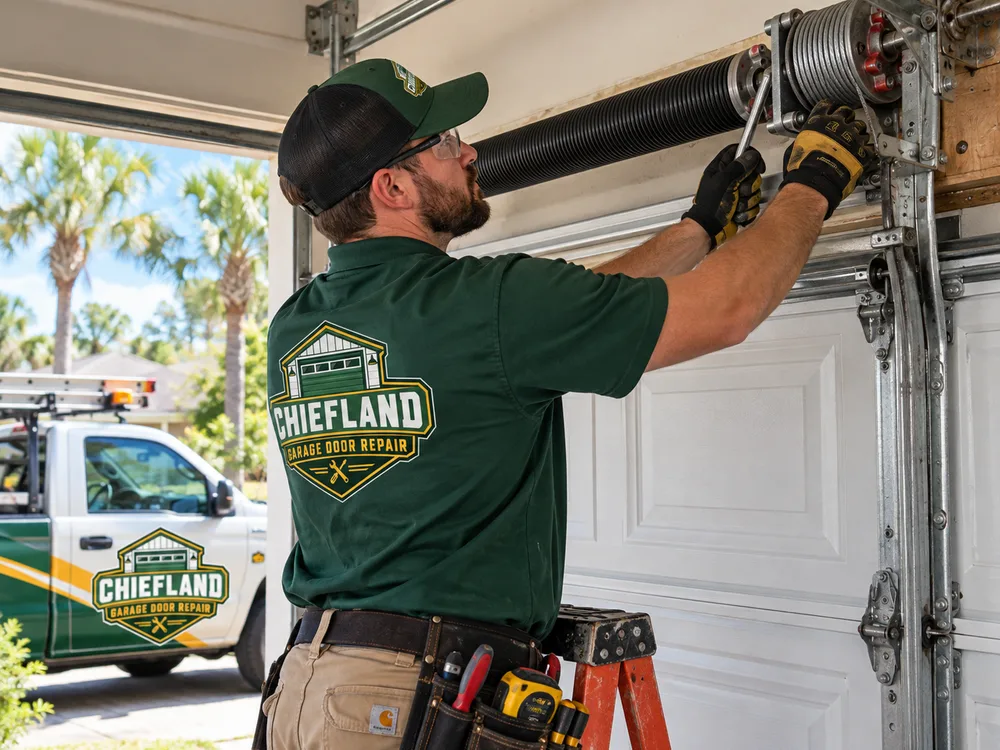
A sharp bang followed by a door that feels extremely heavy often points to a failed torsion or extension spring. Do not operate the opener or attempt to replace a spring without the correct tools and training.
Serving Chiefland, Florida
Get help with a stuck, damaged, or unsafe door and a clear repair plan based on what the technician finds.
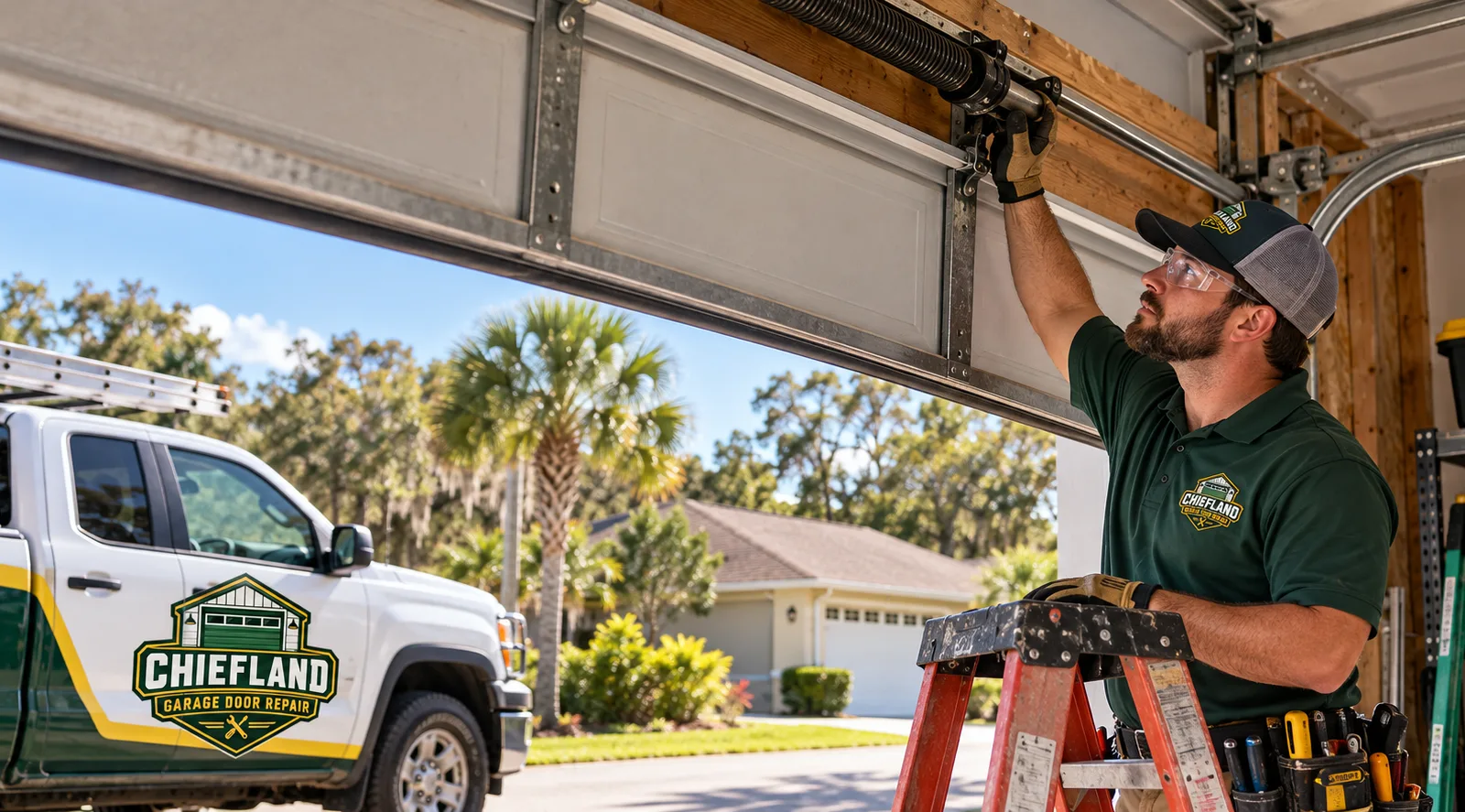
When you need emergency garage door repair Chiefland FL homeowners can turn to Chiefland Garage Door Repair for help diagnosing the immediate problem. A door may stop moving because of a broken torsion spring, a cable that has left its drum, bent track, damaged rollers, an opener fault, or an obstruction in the opening. The first priority is to keep people away from the door and avoid making the damage worse.
Do not pull, push, or repeatedly run a door that is crooked, hanging by a cable, or making harsh grinding sounds. A typical residential door weighs hundreds of pounds, and its springs and cables hold substantial tension. Keep children, pets, and vehicles clear. If the door is open, do not stand or park beneath it. If it is closed, use another exit rather than trying to lift it against a broken spring.
Chiefland Garage Door Repair handles the urgent fault first. The technician can inspect the door system, identify failed components, and explain which work is needed to restore safe movement. For nonurgent adjustments, maintenance, and related faults, garage door repair in Chiefland covers the broader range of repair needs.
A sharp bang followed by a door that feels extremely heavy often points to a failed torsion or extension spring. Do not operate the opener or attempt to replace a spring without the correct tools and training.
An open door can expose vehicles and belongings while leaving a heavy panel suspended overhead. Stay out of its travel path and arrange an inspection rather than forcing it down.
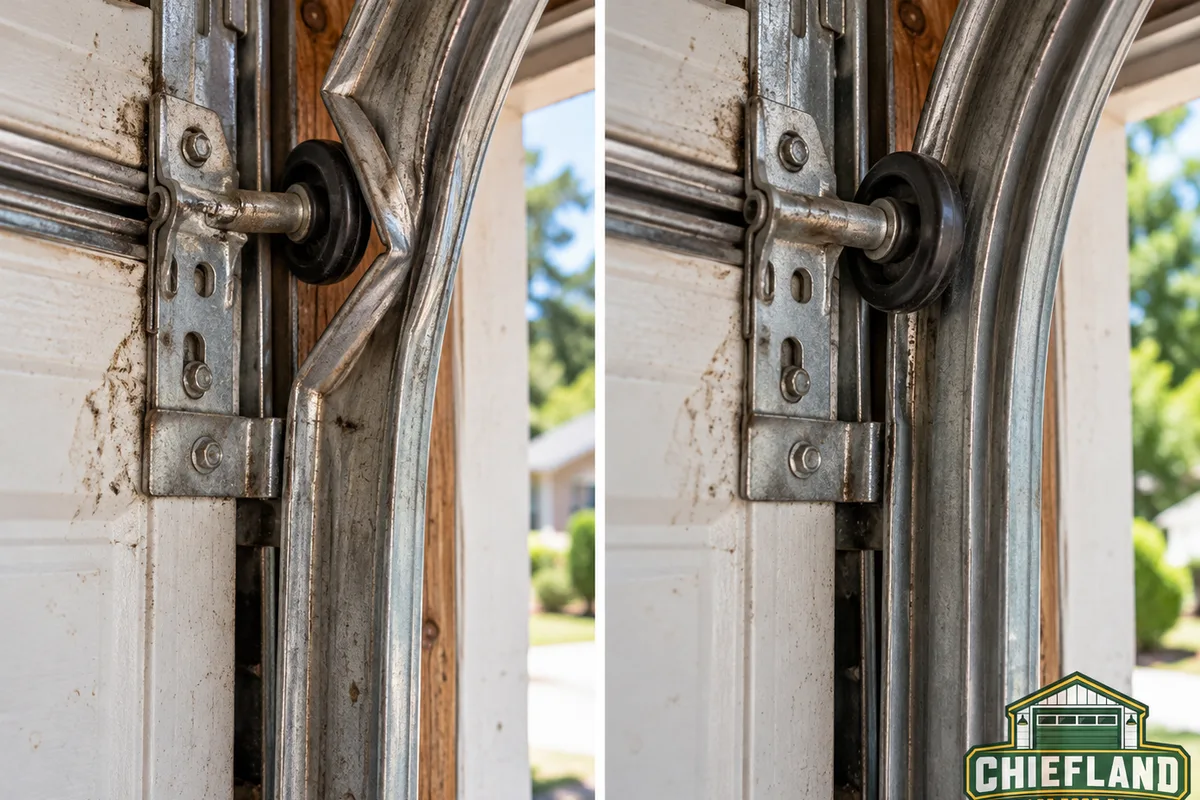
A crooked door, displaced roller, or visible gap between a roller and track can lead to further panel and hardware damage. Stop using the door immediately.
A cable hanging beside the track or unwound from a drum can leave the door unevenly supported. Do not touch it or try to wind it back into place.
A vehicle strike can bend a track, buckle a panel, or move the door out of square. Even if the door still runs, continued operation can worsen the damage.
Unexpected movement, failure to reverse at an obstruction, or a door that travels beyond its normal limit requires attention. Disconnect electrical power only when it is safe to reach the plug.
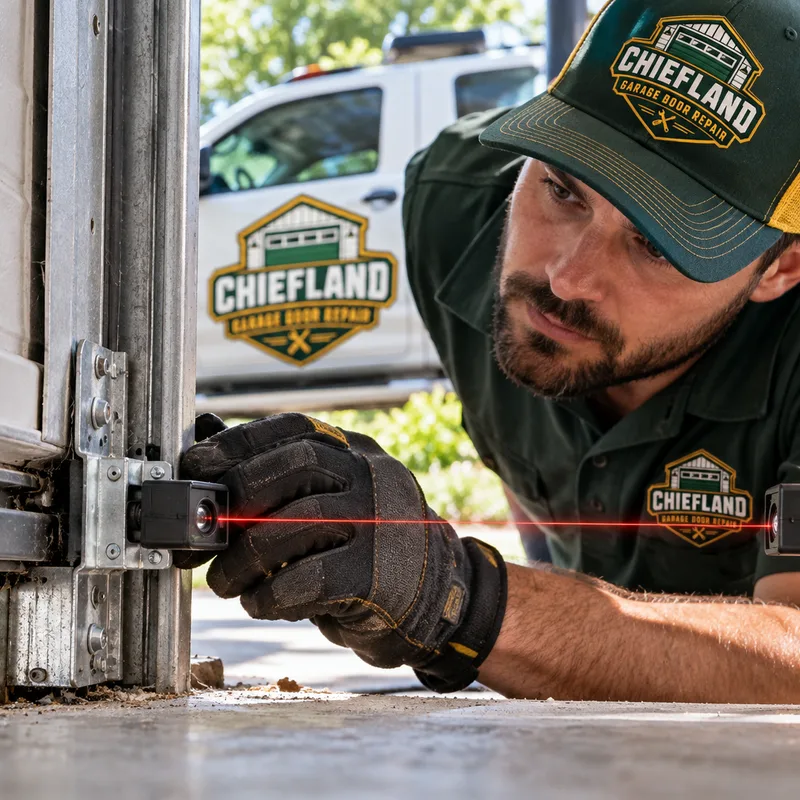
Start by keeping everyone away from the opening. Look from a safe distance for a broken spring, hanging cable, roller outside the track, bent panel, or object blocking the photo-eye sensors. Do not handle high-tension hardware.
If the opener runs while the door does not move, stop pressing the control. Continued operation can strip an opener gear, pull on a damaged top panel, or tangle a loose cable. Leave the emergency-release cord alone when the door is open, crooked, or unusually heavy. Releasing the opener in those conditions may allow the door to fall.
Florida's heat, humidity, heavy rain, and wind-driven debris can affect exposed hardware and electrical components. Moisture may contribute to corrosion, while leaves or debris can block the bottom seal or sensor path. After severe weather, inspect visually before operating the door. Chiefland Garage Door Repair can determine whether the fault is limited to an obstruction or requires mechanical or electrical repair.
Step 1 of 5
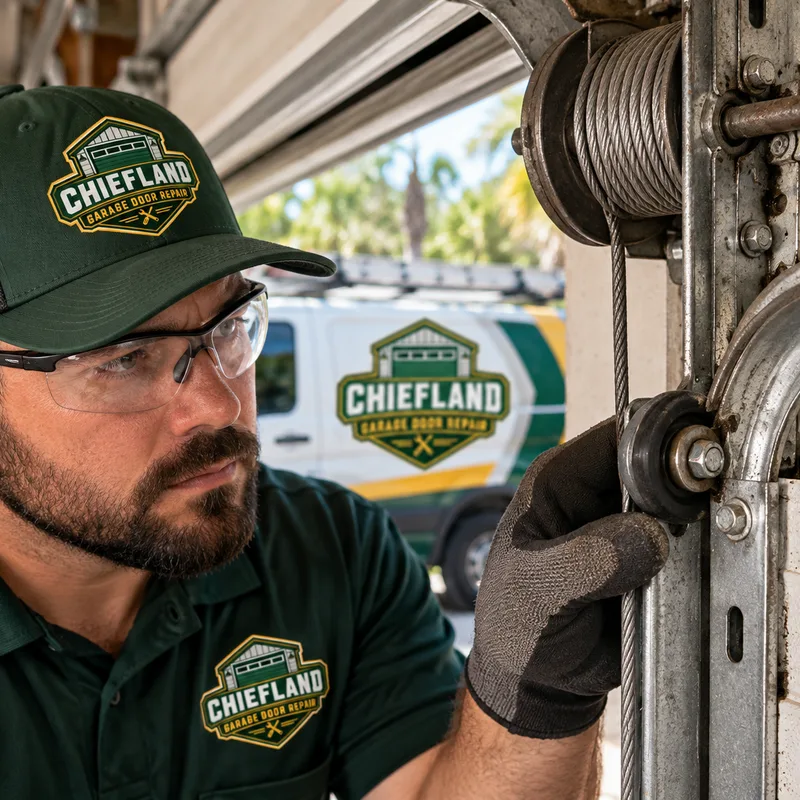
The door position, track alignment, spring condition, cables, and impact damage are checked before anything is moved.
Step 2 of 5
Keep people and vehicles out of the opening. The technician first checks the door's position, stored spring tension, track alignment, cables, rollers, hinges, opener connection, and safety controls.
Step 3 of 5
The inspection separates the main fault from related damage. For example, a displaced cable may be the result of a broken spring, seized roller, bent track, or door that has become uneven.
Step 4 of 5
You receive an explanation of the work needed to restore safe operation. Parts, access, door construction, and secondary damage can affect the scope.
Step 5 of 5
After authorized work is completed, the door should be balanced and tested through its travel. Opener limits, force settings, photo-eye reversal, hardware, and manual operation are checked as applicable.
A garage door is a connected counterbalance system. Springs offset the door's weight, cables transfer lifting force, drums keep those cables aligned, and rollers guide the sections through the tracks. The opener moves a properly balanced door; it is not intended to compensate for a failed spring or binding track.
That is why replacing the first visibly broken part may not solve the whole problem. A snapped cable can accompany a worn bearing or uneven spring tension. A door that reverses may have blocked photo eyes, incorrect travel limits, resistance in the tracks, or damage along a panel edge. A technician should find the cause before repairing or replacing parts.
Emergency work should also account for the door's position. Securing a door that is stuck open differs from troubleshooting one that is closed and cannot be lifted. Chiefland Garage Door Repair evaluates the current load on the hardware before moving or disconnecting anything.
Guidance for stuck, off-track, spring-damaged, and unexpectedly moving garage doors.
Do not try to close it if the door is crooked, off track, supported by a loose cable, or difficult to move. An open door may have stored spring tension or uneven support, and pulling the emergency release can cause sudden movement. Keep the Chiefland property secure by moving valuables inside through another entrance when possible, then arrange an inspection.
A loud bang followed by a heavy door often indicates a broken spring, but the system must be inspected to confirm the cause. A torsion spring may show a visible gap in the coil above the door. Do not touch the spring, cables, or drums, and do not use the opener to lift the door.
No, operating the opener with a broken spring can overload the motor and damage the door or opener rail. On a two-spring torsion system, the remaining spring does not make normal operation safe. Leave the door closed when possible and have the full counterbalance system assessed.
An off-track door does not automatically require complete replacement. Repair may be possible when the sections remain sound and the damage is limited to tracks, rollers, cables, or hardware. Severe panel buckling, torn mounting points, or widespread impact damage can change that recommendation after an on-site inspection in Chiefland.
State whether the door is open or closed, whether a vehicle is trapped, and whether you can see a broken spring, hanging cable, bent track, or damaged panel. Also mention unusual sounds, a recent impact, storm exposure, and what happened immediately before the failure. These details help Chiefland Garage Door Repair prepare for the initial inspection.
No, opener trouble may come from sensor alignment, power supply, wiring, travel limits, remote controls, trolley components, or door resistance. The door should first be tested manually when it is safe to do so because a balance problem can appear to be an opener failure. Replacement depends on the diagnosis and condition of the equipment.
The door position, springs, cables, tracks, and panels are inspected to identify the cause of the failure.