Opening and Headroom Check
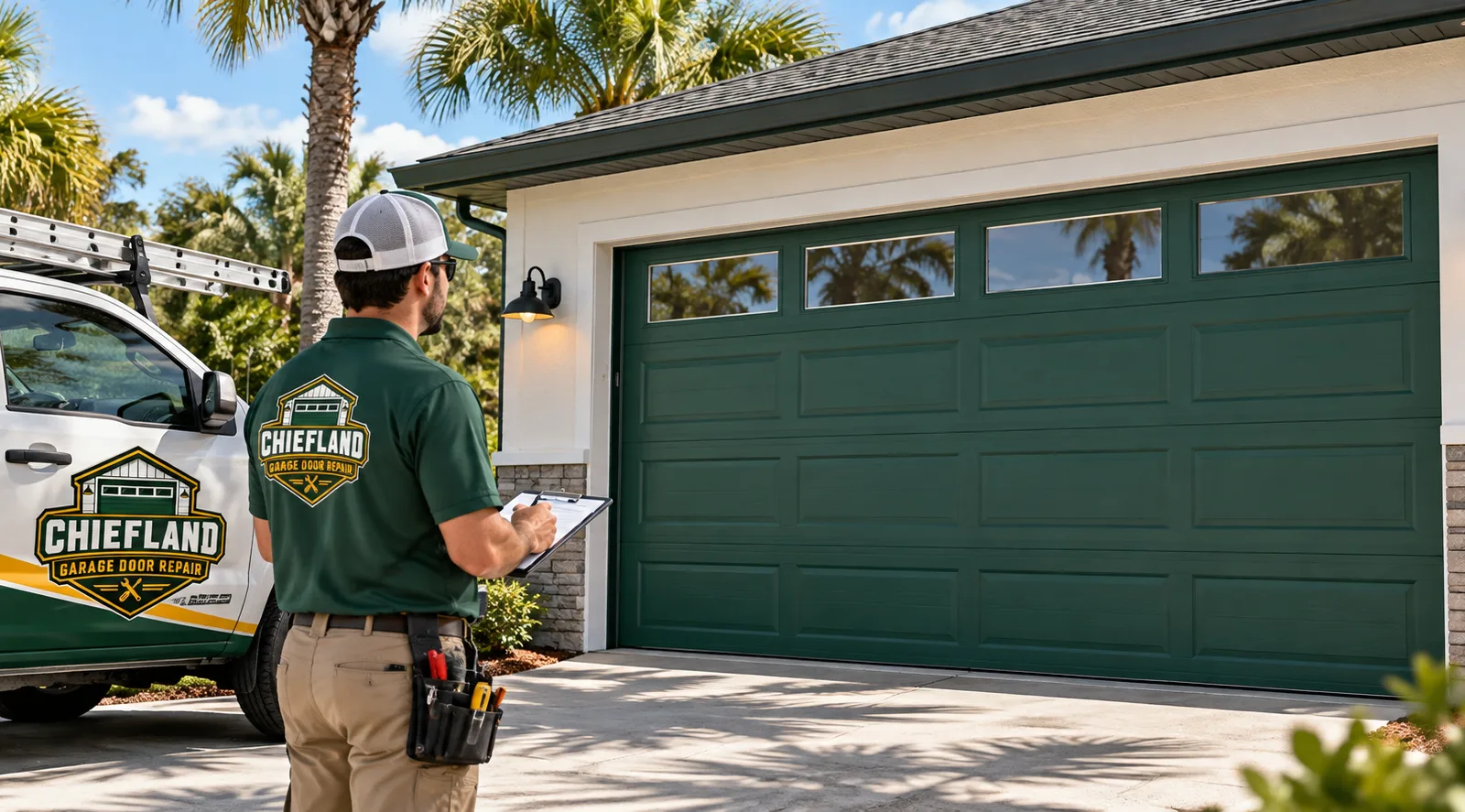
The opening is measured for width, height, side room, headroom, backroom, floor level, and framing condition. These dimensions determine whether standard track geometry fits or a different track arrangement is needed.
Serving Chiefland, Florida
Replace a dented, drafty, or worn door with a properly fitted steel or insulated model, complete with compatible tracks and hardware.
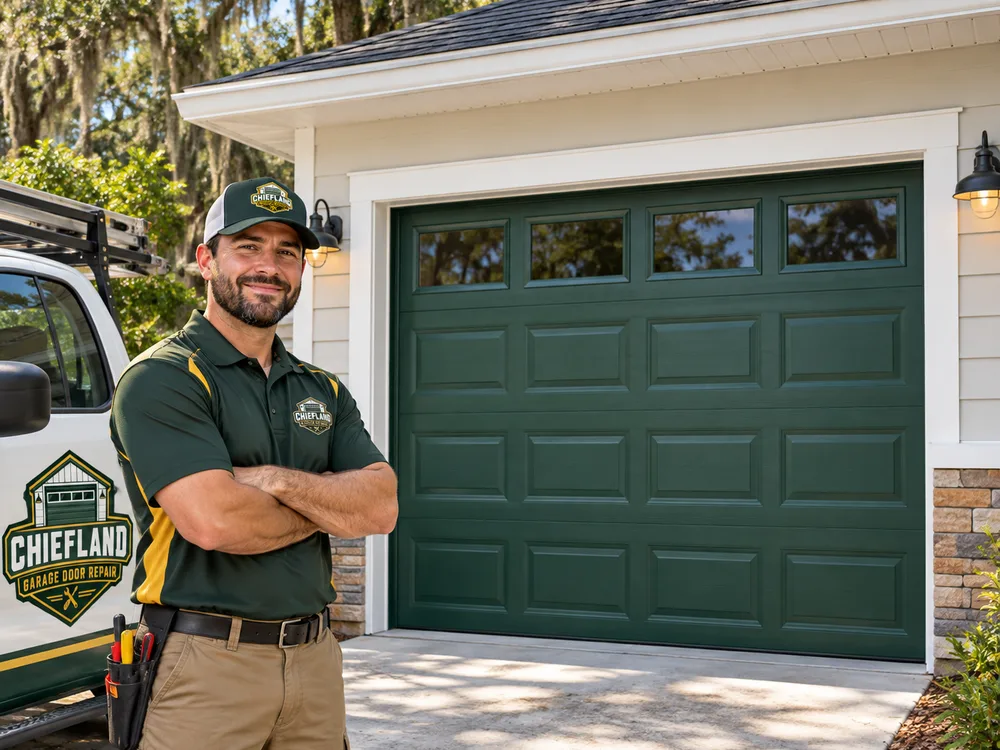
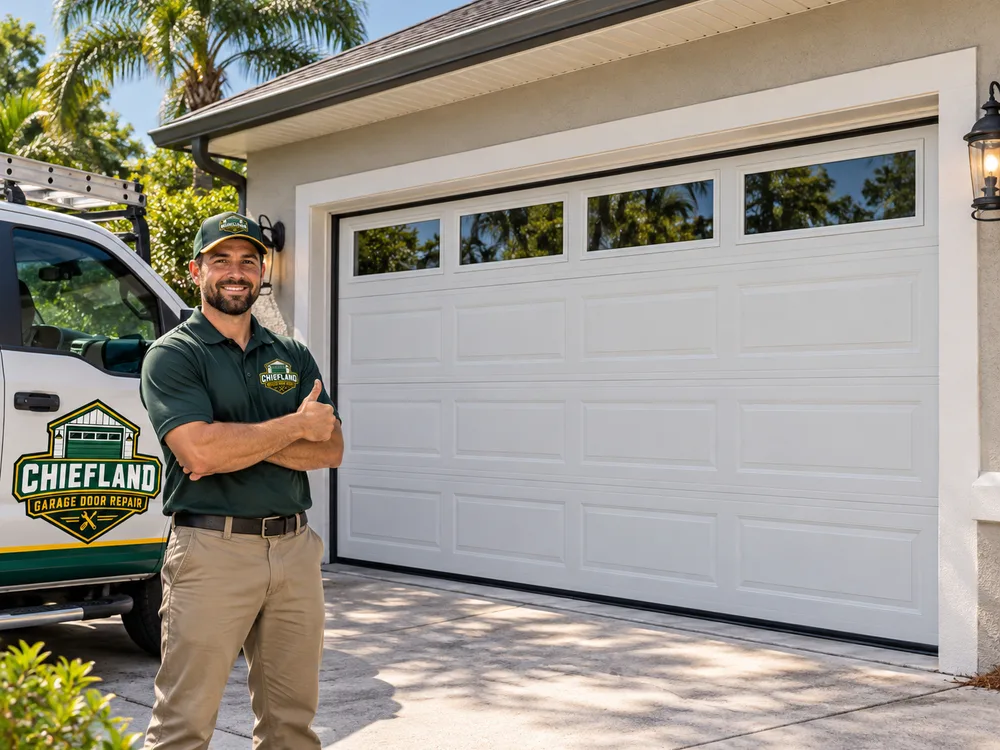
Garage door installation in Chiefland, FL starts with accurate measurements and a clear choice of door, insulation, hardware, and appearance. Chiefland Garage Door Repair installs residential garage doors as complete operating systems rather than treating the door panels as an isolated purchase.
A new installation may be appropriate when an old door is badly dented, has corrosion around the lower panel, no longer seals evenly, or needs repeated adjustments to stay on its tracks. Replacement also gives you the chance to change the design, add insulation, or select windows that admit daylight without turning the garage into an exposed display area.
North Central Florida heat, humidity, heavy rain, and wind-driven debris all affect material choices. A baked-on steel finish is easier to maintain than unfinished material, while intact perimeter weatherstripping and a sound bottom seal help limit rain, dust, insects, and hot outside air. Wind-load requirements depend on the property and applicable code, so the selected door and supporting hardware should match the opening and installation conditions.
Steel doors are a practical choice for many homes because they are available in several panel designs, colors, window arrangements, and insulation levels. A non-insulated door may suit a detached garage used mainly for parking or storage. An insulated door is often worth considering when the garage shares a wall or ceiling with conditioned living space, receives strong afternoon sun, or is used as a workshop.
Insulation is commonly described by R-value, but that number is only one consideration. Panel construction, section joints, perimeter seals, and the fit at the floor also affect comfort. A door with polyurethane insulation generally provides more insulation per inch than one with polystyrene, although available specifications vary by model.
Color and panel style should work with the home's exterior, but added weight matters too. Windows, insulation, and heavier-gauge construction can change the spring requirements. Chiefland Garage Door Repair accounts for the complete door configuration before matching springs and related hardware.
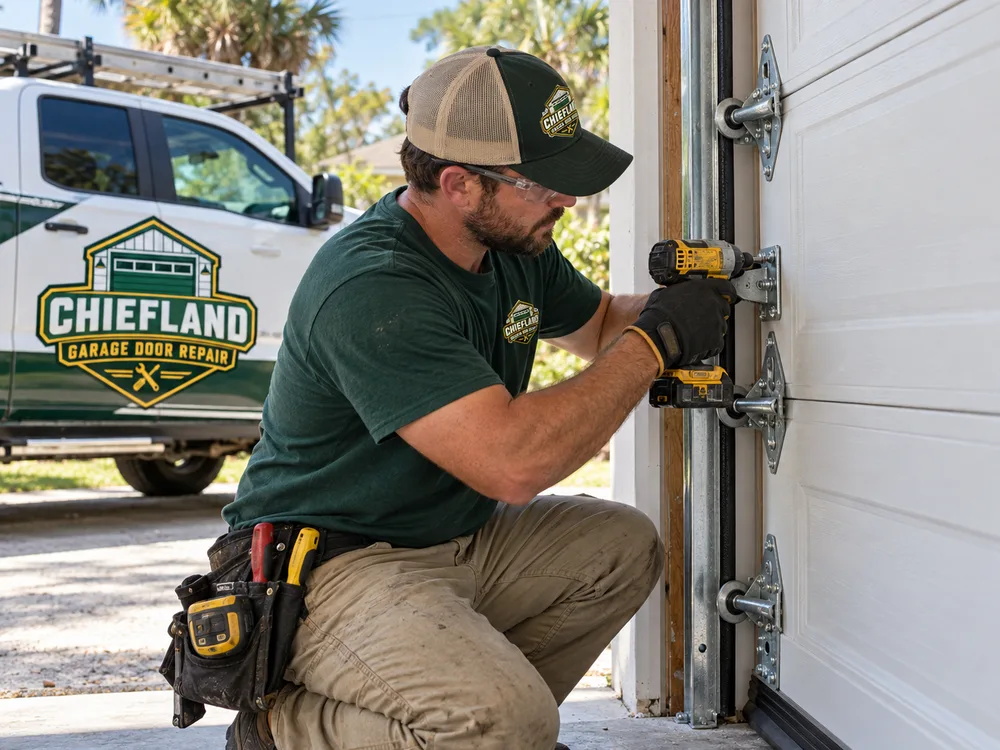
Each part is selected and adjusted to help the finished door move smoothly, seal consistently, and work with compatible equipment.
The opening is measured for width, height, side room, headroom, backroom, floor level, and framing condition. These dimensions determine whether standard track geometry fits or a different track arrangement is needed.
Sections are assembled and set into new vertical and horizontal tracks. Brackets, hinges, rollers, fasteners, and reinforcement are matched to the selected door and opening.
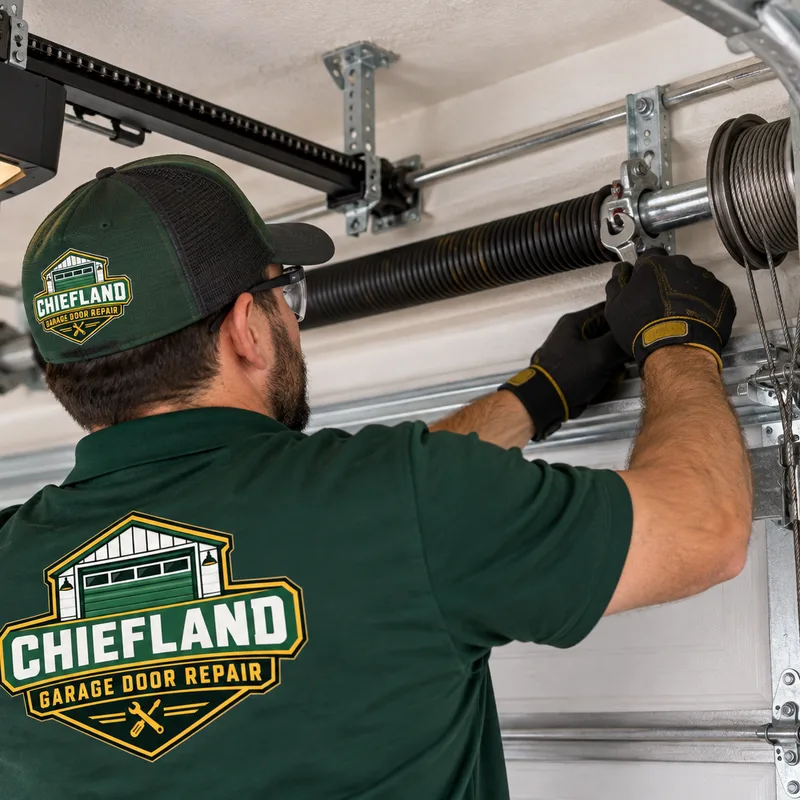
Torsion or extension springs must be sized for the actual door weight. Correct balance helps the door stay controllable through its travel and reduces unnecessary strain on the opener.
A bottom seal and perimeter weatherstripping close normal gaps around the door. An uneven slab or damaged jamb may require additional preparation before the seal can make consistent contact.
An existing opener can be evaluated for door weight, travel, mounting, reinforcement, and safety-reversal operation. An opener does not compensate for a door that is poorly balanced.
The finished door is checked for smooth travel, track alignment, spring balance, secure hardware, seal contact, and proper connection to any compatible opener.
Step 1 of 5
We look over the current door, framing, tracks, spring arrangement, available clearance, and floor condition. Measurements are taken before a replacement configuration is selected.
Step 2 of 5
You choose the size, panel design, finish, insulation level, window option, and relevant hardware. The scope should also state whether the existing opener will remain and what preparation the opening needs.
Step 3 of 5
The old door sections and associated hardware are taken down in a controlled sequence. Garage door springs store substantial energy, so spring removal and setup belong in trained hands.
Step 4 of 5
The new tracks, sections, rollers, hinges, cables, and spring system are installed and adjusted. The door is balanced independently before an opener is connected.
Step 5 of 5
Travel, clearances, fasteners, seals, manual operation, and opener functions are checked. The final review should also cover basic care and warning signs that warrant attention.
A garage door can look level while still binding, carrying uneven cable tension, or placing too much load on the opener. Track spacing and alignment must allow the rollers to travel without being pinched. The shaft, drums, cables, and springs must work together so both sides rise at the same rate.
The top section also needs suitable reinforcement where an opener arm attaches. Without it, repeated opener force can flex or damage the panel. Photo-eye sensors should be mounted near the floor, aligned, and tested, while the opener's force and travel limits should suit the finished door.
Salt-air exposure is generally less direct inland than along Florida's immediate coast, but humidity and wet weather still make finish condition and hardware care important. Keeping leaves and grit out of the tracks, cleaning the exterior with products approved by the manufacturer, and replacing torn seals can help preserve the installation. If the new door later needs mechanical attention, garage door repair in Chiefland should begin with the door's balance and hardware rather than an automatic assumption that the opener is at fault.
Practical guidance about timing, insulation, opener compatibility, hardware, floor conditions, and project scope.
An insulated door is worth considering when the garage adjoins conditioned rooms, receives prolonged sun, or is regularly used for projects. Chiefland's hot, humid climate makes heat transfer and air leakage relevant, but insulation does not turn an unconditioned garage into living space. Panel construction, seals, and the condition of the surrounding walls also matter.
An existing opener may remain if it is compatible with the new door and is in suitable operating condition. The review should include mounting, lifting capacity, rail travel, panel reinforcement, safety sensors, and reversal settings. The new door must first be correctly balanced because the opener is designed to move the door, not lift excessive dead weight.
A complete replacement normally uses tracks, springs, cables, rollers, hinges, and brackets matched to the selected door. Reusing old components is not automatically appropriate because door weight, section thickness, track geometry, and hardware specifications may differ. The written scope should identify exactly which parts are being replaced.
Minor slab variation may be managed through careful door setup and an appropriate bottom seal, but a severely uneven or damaged floor can leave persistent gaps. The opening should be measured at several points, and the slab condition should be reviewed before the door is ordered. Structural or concrete correction may need to occur first.
The opening, current door, garage use, door options, and installation details are reviewed before work begins.