
A roller has left the track
One or more rollers sit outside the metal guide, or the roller stem appears twisted against the hinge.
Serving Chiefland, Florida
Stop a crooked, jammed, or partially open door from causing more damage. Chiefland Garage Door Repair can assess the tracks, rollers, cables, and related hardware and determine the proper repair.
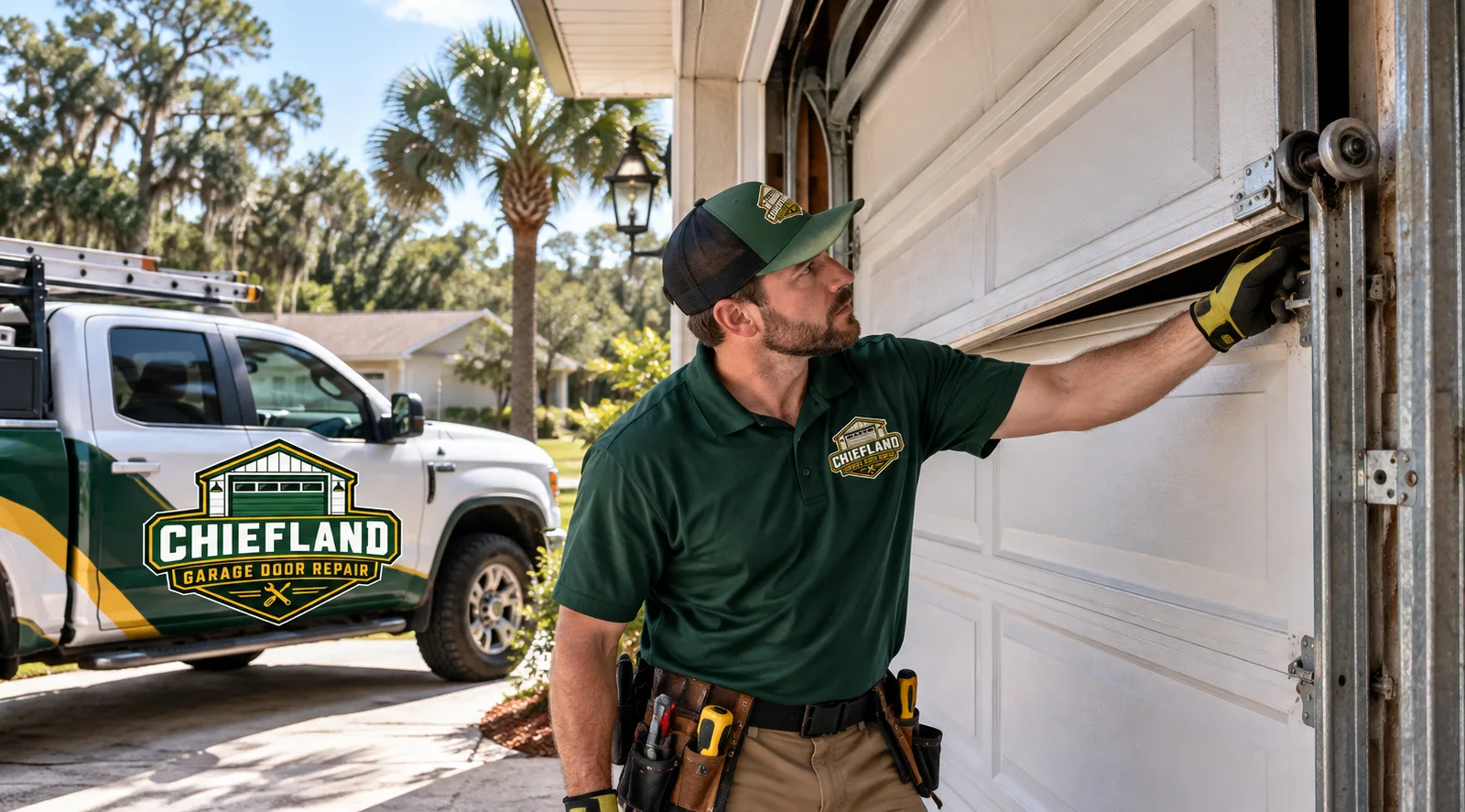
Garage door off track repair in Chiefland, FL begins with securing the door and identifying why it left its normal path. A displaced roller may be the visible problem, but bent track, loose mounting brackets, cable trouble, an obstruction, or impact damage may be responsible. Chiefland Garage Door Repair evaluates the whole operating path before recommending work.
Do not keep pressing the opener when the door is crooked, binding, or hanging unevenly. The opener is designed to move a balanced door along aligned tracks. It is not meant to pull a jammed door back into position. Continued operation can bend track farther, damage additional rollers, strain the opener, or allow the door to shift suddenly.
Keep people, pets, and vehicles away from the opening. Do not stand beneath the door or try to force it closed by hand. If the door is partly open, leave it alone until it can be assessed. Track alignment and cable tension affect each other, and garage doors are heavy assemblies with components under stored tension.
A roller can leave the track after a vehicle or stored item strikes the door. Track brackets may loosen and let the vertical track move away from its correct position. A damaged or worn roller can bind instead of traveling smoothly around the track radius. Debris near the opening may also interrupt normal movement.
Uneven cable movement is another serious possibility. If one lift cable loses tension, slips, or becomes damaged, one side of the door may rise faster than the other. The door can rack diagonally in the opening and force rollers against the track. That condition requires more than pushing a roller back into place because the lifting system must be checked as well.
Florida humidity and wind-driven rain can expose garage-door hardware to moisture. Corrosion, accumulated grit, and deteriorated roller bearings can contribute to rough movement. These conditions do not automatically mean every part needs replacement, but they make a complete inspection more useful than treating the displaced roller alone.
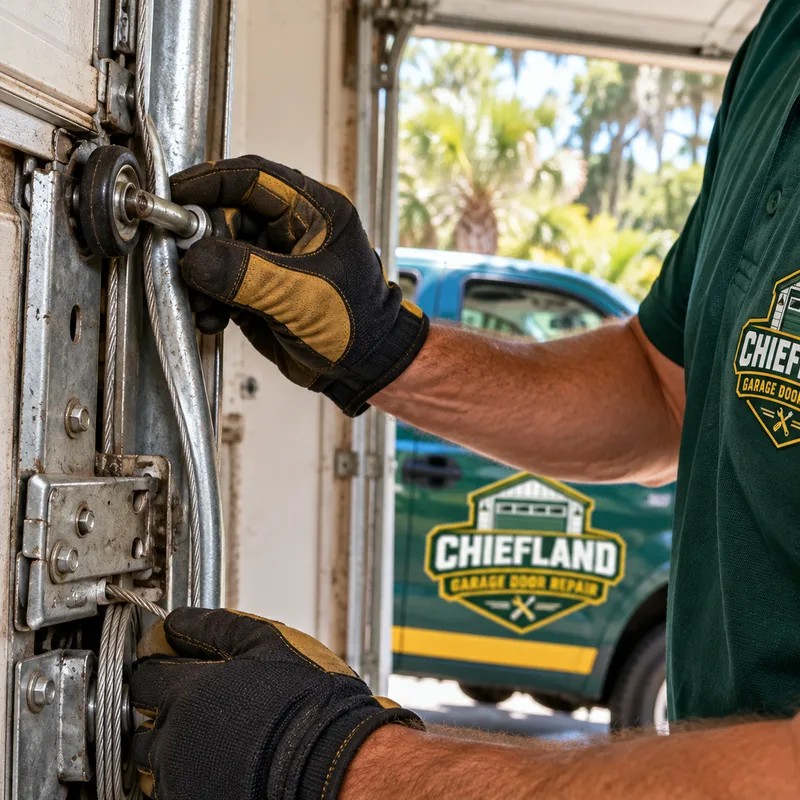
Crooked travel, shifted hardware, displaced rollers, and cable problems should be assessed before the opener is used again.
One or more rollers sit outside the metal guide, or the roller stem appears twisted against the hinge.
One bottom corner is higher than the other, or the gaps along the opening are visibly uneven.
The door jerks, scrapes, or stops at the same point. Repeated opener use may add damage.
A vertical track bows outward, a bracket is loose, or the track no longer runs parallel to the door edge.
A slack, frayed, or displaced cable can allow uneven movement. Avoid touching it or attempting to reset it.
Even when the panel damage looks minor, an impact can change track spacing or push rollers out of position.
Step 1 of 5
The first priority is controlling movement. The opener may be taken out of operation while the door is supported in a safe working position.
Step 2 of 5
The tracks, rollers, hinges, brackets, cables, drums, panels, and opener connection are checked. Looking at both sides helps identify why the door became uneven.
Step 3 of 5
Depending on condition, the work may include repositioning track, tightening or replacing mounting hardware, returning serviceable rollers to the track, or replacing damaged rollers and related parts. Cable or panel damage changes the repair scope.
Step 4 of 5
The vertical tracks and curved sections must guide the rollers without squeezing them or allowing excessive side movement. Fasteners are secured after the position is corrected.
Step 5 of 5
The door is moved through its operating path to check for rubbing, binding, unusual sound, and uneven travel. Opener operation should resume only after the door moves correctly.
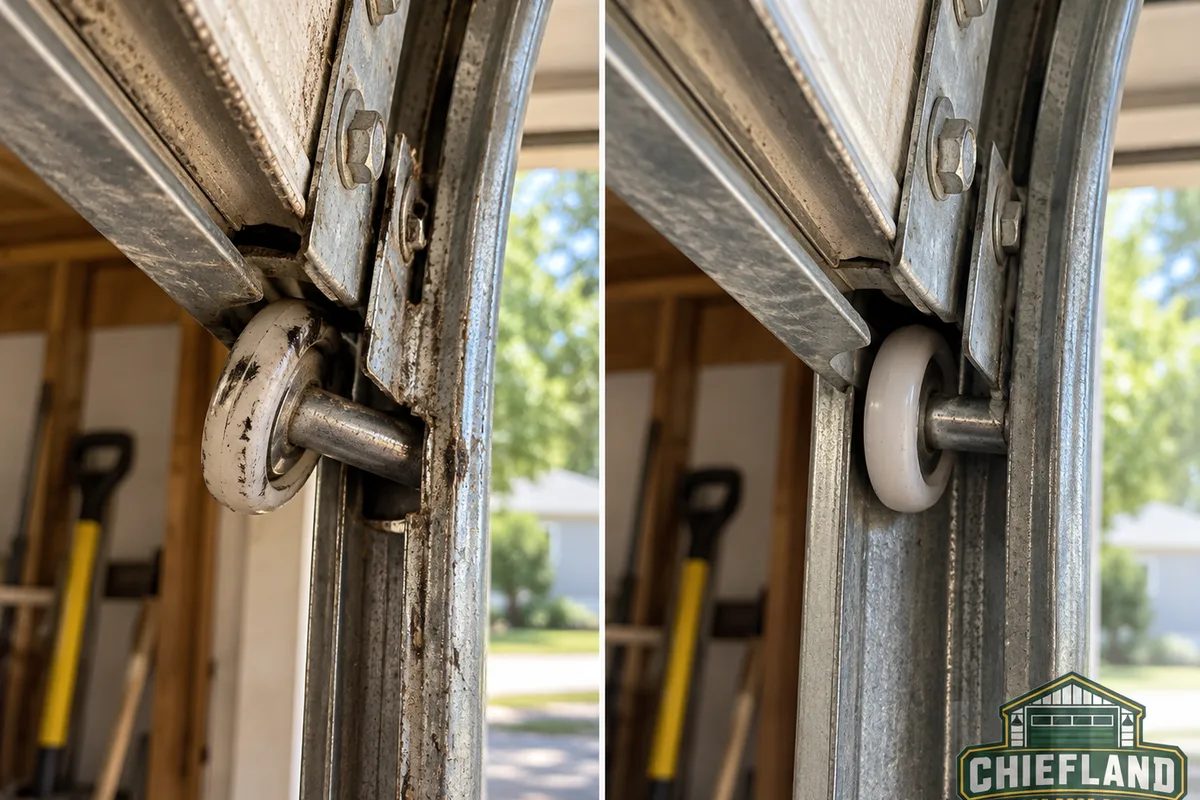
A sound repair depends on the condition of the parts. A straight track that shifted at a loose bracket may be repositioned and secured. A sharply creased or split track may need replacement because reshaping damaged metal does not always restore a dependable roller path. A worn roller, cracked hinge, or bent roller stem should also be addressed if it contributed to the failure.
Panel condition matters after an impact. A bent panel can change how the door sits in the opening and continue pushing rollers sideways even after track alignment. Cable condition must also be considered when the door is out of level. Lift cables and springs are part of a tensioned system and are not suitable for do-it-yourself adjustment.
If the problem proves broader than an off-track condition, garage door repair in Chiefland may involve adjacent operating hardware. Chiefland Garage Door Repair can explain which components are related to the immediate failure and which items, if any, are separate concerns.
A door that is crooked, jammed, or partly open can shift without warning. Arrange an assessment before trying the opener again or moving the door by hand.
CALL NOW: (352) 855-3806Practical guidance about crooked doors, damaged tracks, displaced rollers, and loose cables.
No, a visibly crooked or off-track garage door should not be forced closed. A loose cable, displaced roller, or bent track can allow the door to drop or shift, and pulling the opener release does not make a jammed door safe. Keep the opening clear and let Chiefland Garage Door Repair assess how the door is supported.
A track may be realigned when it is structurally sound and has shifted because of loose brackets or minor deformation. Replacement is more likely when the track is sharply creased, torn, heavily corroded, or unable to hold correct spacing. The roller path and mounting points must be inspected before choosing repair or replacement.
Yes, repeatedly operating a jammed or crooked door can strain the opener and its attachment hardware. The opener may keep pulling even though the door cannot travel correctly. Stop using the controls as soon as the door binds, tilts, scrapes, or leaves the track.
A loose cable can cause uneven movement that pushes rollers out of the track, but it may also indicate a separate lifting-system fault. Do not wind, pull, cut, or reposition a garage-door cable. Cables work with drums and springs under tension, so the complete lifting system needs assessment.
Individual rollers can often be replaced when the track, hinges, and door sections remain serviceable. The technician should still identify why the roller failed or escaped the track. Incorrect track spacing, a bent hinge, bearing wear, or an uneven door can damage a new roller if the cause remains.
Leave the door in place and avoid trying to lift or straighten it if it is crooked or unsupported. Tell Chiefland Garage Door Repair that the vehicle is blocked when arranging service so the access problem and the door's position are clear before the visit.
Tell Chiefland Garage Door Repair what the door is doing, whether it was struck, and where it is stuck. A focused inspection can identify the cause and establish the right repair scope.